تُعتبر الانتخابات، في أعقاب النزاعات المسلحة، أداة أساسية لبناء السلام وتعزيز الاستقرار، حيث تلعب دورًا حيويًا في تحقيق الشرعية السياسية وإعادة بناء الثقة بين أفراد المجتمع. تعد الانتخابات بعد الحرب خطوة هامة نحو تجاوز آثار الصراع وفتح الباب أمام فترة جديدة من الاستقرار. يعرض كتاب “من الحرب إلى الديمقراطية: تحديات بناء السلام” أهمية الانتخابات في سياق الانتقال نحو الديمقراطية، ومدى تأثيرها في تحقيق الاستقرار المنشود أو تحفيز العودة إلى العنف.
عادةً ما تسعى الانتخابات التي تُجرى بعد النزاع لتحقيق هدفين رئيسيين؛ الأول يتمثل في تشكيل سلطة شرعية تعكس إرادة جميع فئات الشعب، ما يعني خلق شعور بالتوازن والعدالة بين مختلف مكونات المجتمع. يشكل هذا الهدف أساسًا لبناء الثقة في النظام السياسي، إذ يساهم في توحيد الرؤى وتخفيف التوترات التي غالبًا ما تكون موجودة بعد انتهاء النزاع. الهدف الثاني هو تثبيت اتفاقيات السلام وإغلاق ملف الحرب بشكل نهائي، حيث ترسخ الانتخابات الشرعية السياسية وتؤكد على نهاية مرحلة الصراع وبداية مرحلة السلم.
لكن لكي تحقق الانتخابات أهدافها بشكل كامل، من الضروري توفير بيئة سياسية مفتوحة وآمنة تتيح للجميع المشاركة بحرية وبدون تمييز. ينبغي أن تشمل هذه البيئة ضمان حرية التعبير والتنقل للجميع، ما يتيح للأفراد التعبير عن آرائهم بحرية وتقديم دعمهم للمرشحين الذين يمثلونهم بشكل حقيقي. ومع ذلك، فإن هذا الانفتاح قد يستغله البعض لنشر خطاب الكراهية أو التحريض ضد المرشحين المنافسين، وهو ما قد يُشكل تهديدًا لعملية الانتقال السلمي، ويعيد إشعال جذوة العنف.
تُضيف الطبيعة التنافسية للانتخابات بُعدًا آخر من التحديات، حيث يسعى كل مرشح لإثبات جدارته وقدرته على تلبية تطلعات الناخبين، مع محاولة تقويض مصداقية المنافسين. ورغم أن هذا جزء طبيعي من أي عملية ديمقراطية، إلا أن التنافس في مرحلة ما بعد الحرب قد يسبب توترات ويؤدي إلى نزاعات، خاصة إذا انزلق الخطاب الانتخابي نحو أساليب التحريض أو تشويه صورة الآخرين. وهنا تأتي أهمية وضع قوانين صارمة تحكم السلوك الانتخابي وتمنع استخدام وسائل قد تضر بالنسيج الاجتماعي وتهدد السلام المستعاد حديثًا.
لتحقيق نزاهة وفعالية العملية الانتخابية، يجب على المؤسسات الانتخابية أن تكون يقظة وتتخذ إجراءات صارمة لمنع أي محاولات لنشر خطاب الكراهية أو التحريض، فضلًا عن ضرورة توفير دعم دولي لضمان الرقابة على سير الانتخابات ونزاهتها. هذا الدعم الدولي يُضفي المزيد من الشفافية ويعزز من ثقة الشعب في أن نتائج الانتخابات ستكون عادلة وتعكس إرادتهم الحقيقية، مما يساهم في بناء نظام ديمقراطي يحظى بالقبول الشعبي.
بشكل عام، ليست الانتخابات بعد النزاعات مجرد وسيلة لاختيار قادة جدد، بل هي اختبار حقيقي لقدرة المجتمع على تجاوز خلافات الماضي وتأسيس مستقبل مستقر. قد تكون الانتخابات بعد النزاع إما نقطة تحول نحو الديمقراطية والسلام، أو مدخلًا لعودة العنف، وذلك يعتمد على مدى القدرة على إدارتها بحكمة وفعالية.كلمات مفتاحية: الانتخابات، بناء السلام، النزاعات المسلحة، الشرعية السياسية، الديمقراطية، خطاب الكراهية، الاستقرار، التحريض، التنافس السياسي، اتفاقيات السلام.
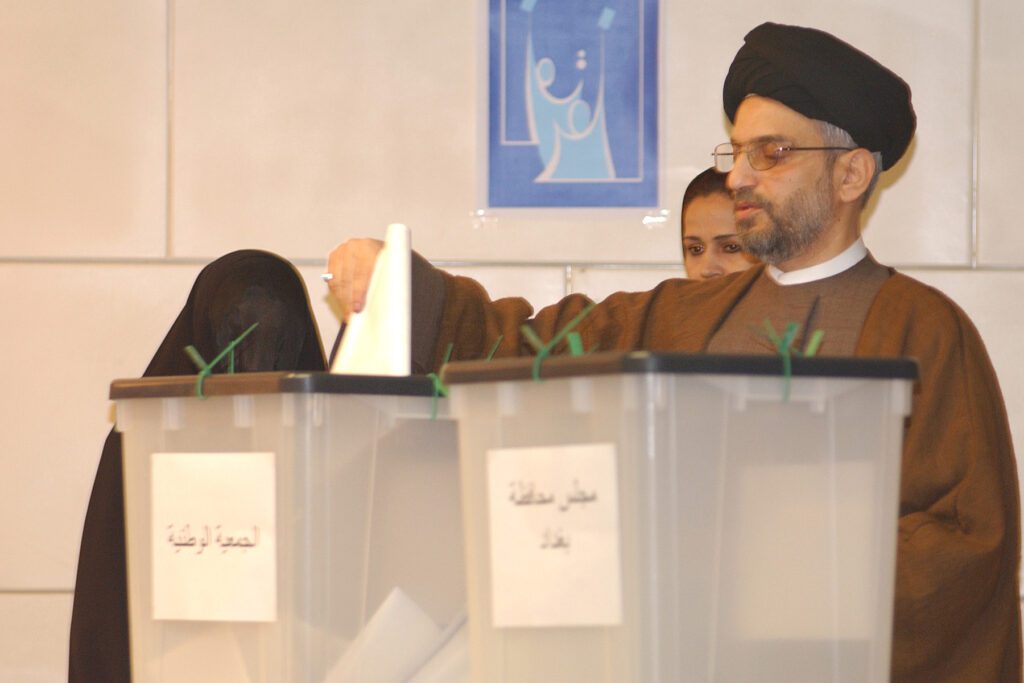
في الصورة عبد العزيز الحكيم، زعيم حزب المجلس الأعلى للثورة الإسلامية في العراق، يدلي بصوته في أول انتخابات حرة في العراق في مركز اقتراع داخل مركز مؤتمرات بغداد في العاصمة العراقية بغداد، يوم 30 يناير 2005 في أول انتخابات حرة تشهدها العراق منذ أكثر من 50 عامًا.
المصدر: Jarstad, A. K., & Sisk, T. D. (Eds.). (2008). From war to democracy: Dilemmas of peacebuilding. Cambridge University Press.
In the aftermath of armed conflicts, elections are viewed as a fundamental tool for peacebuilding and stabilizing society, playing a pivotal role in re-establishing political legitimacy and rebuilding trust among citizens. Post-war elections are a crucial step toward overcoming the remnants of conflict and opening the door to a new period of stability. The book From War to Democracy: Dilemmas of Peace Building delves into the importance of elections in transitioning to democracy, examining whether they effectively achieve stability or potentially reignite violence.
Typically, post-conflict elections aim to fulfill two main objectives. The first is to establish a legitimate authority that reflects the will of all sectors of society, fostering a sense of fairness and inclusion among diverse groups. This goal serves as a foundation for rebuilding trust in the political system, as it helps unify perspectives and mitigate the tensions that often linger after conflict. The second objective is to solidify peace agreements and definitively close the chapter on war, affirming the legitimacy of the political framework and signaling the end of conflict and the start of peace.
However, for elections to fulfill these aims, it is essential to create an open and secure political environment that allows all individuals to participate freely and without discrimination. This environment should safeguard freedom of expression and movement, enabling people to express their views openly and support candidates who genuinely represent their interests. Nonetheless, this openness can be exploited by some individuals or groups seeking to spread hate speech or incite hostility against opposing candidates, which poses a risk to the fragile peace and can potentially reignite violence.
The competitive nature of elections introduces additional challenges, as each candidate strives to demonstrate their qualifications and capacity to meet the electorate’s aspirations while also seeking to discredit opponents. Although this is a normal aspect of any democratic process, post-conflict competition can lead to heightened tensions and spark disputes, especially if campaign rhetoric turns inflammatory or devolves into character attacks. Hence, it is crucial to enforce strict regulations that govern electoral conduct and prevent tactics that may harm the social fabric or endanger newly established peace.
To ensure the integrity and effectiveness of the electoral process, electoral institutions must be vigilant and adopt strict measures to counter any attempts at incitement or hate speech. Additionally, international support should be provided to monitor and ensure the elections’ fairness and transparency. This global oversight enhances public confidence that the election results will be fair and truly reflect their will, which is essential for building a democratic system that enjoys popular acceptance.
In essence, post-conflict elections are more than just a means to select new leaders; they are a genuine test of a society’s ability to move beyond past grievances and lay the groundwork for a stable future. Such elections can either be a turning point toward democracy and peace or a doorway to renewed violence, depending on the wisdom and effectiveness of their management.